

The vineyard of the future
A FREE HAND for YOUNG PEOPLE
to share their VISION of the VINEYARD
OF THE FUTURE
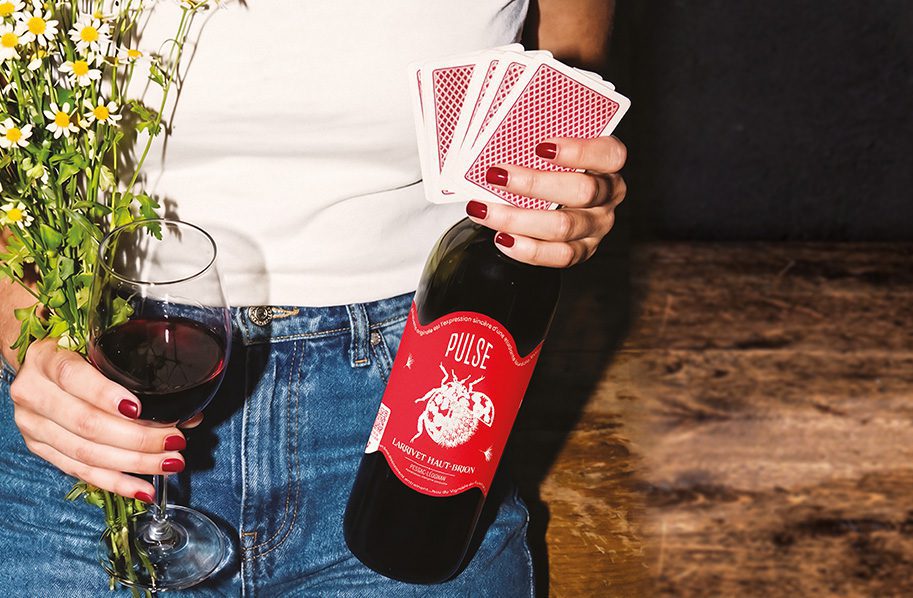
PULSE was born from a reflection conducted with ECV Bordeaux students, who were invited to freely rethink the codes of wine, its container, and its uses. A wine more accessible in its approach, conceived as a gateway to the world of Château Larrivet Haut-Brion.
A crisp, juicy, and convivial wine, PULSE shakes up traditions while remaining deeply rooted in our expertise and terroir.
Behind the scenes of the project
How can we replant 12 hectares of vines today whilst ensuring
the quality of tomorrow’s fine wine?

A project in
glass forestry

The tree at the
heart of the plot
Promoting
biodiversity
Adapt
the grape variety
At the ROOT of the PROJECT
In 2007, Bruno Lemoine took over as managing director of Château Larrivet Haut-Brion and, as an agronomist, began a soil survey to gain a better understanding of the mosaic of terroirs and improve the quality of the wines. From 2015 onwards, Bruno was joined by François Godichon, the estate manager. In 2020, Charlotte Mignon joined the estate as cellar master. She is now Director of Development.
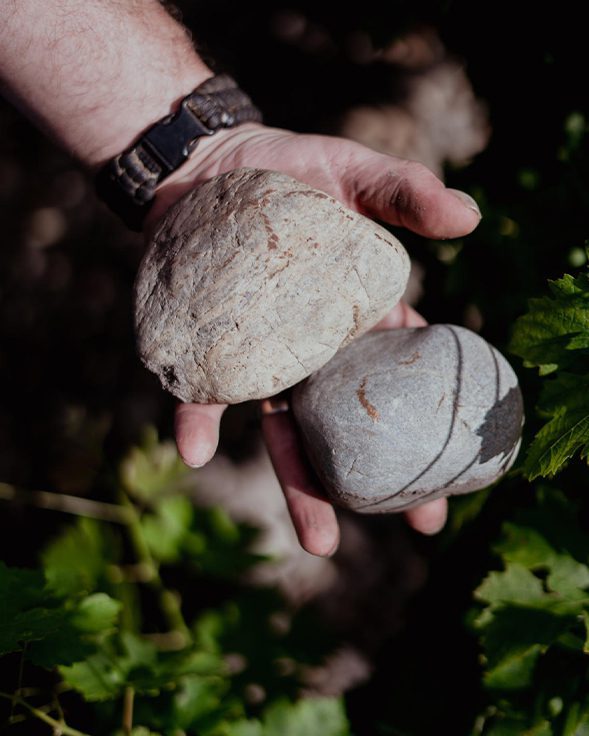
Observations and studies carried out on the last 12-hectare plot acquired by the Gervoson family in 2010 have prompted the team to consider its conversion, including replanting, in order to adapt to climate change and maintain the overall quality standards.
We were starting with a blank canvas of 12 hectares. It’s a real opportunity to undertake a project like this, where we analyse all the factors so that we can turn them to our advantage.
Technical RENEWAL
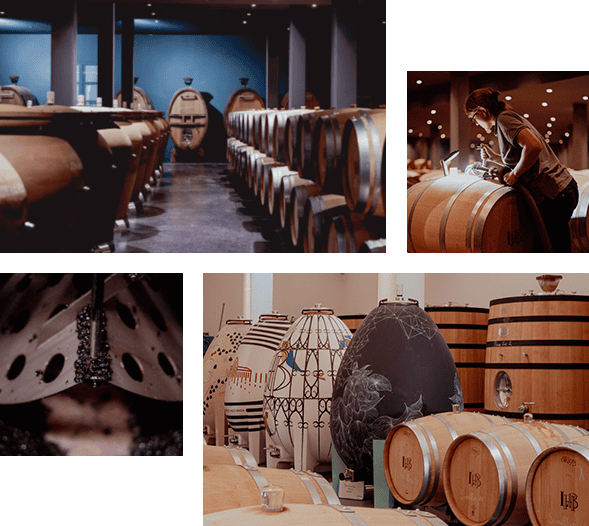
Driven 15 years ago, the technical renewal aims to produce fine terroir wines. The future vineyard project is in keeping with the spirit of Larrivet Haut-Brion, which is based on three main principles:
- a plot-by-plot approach to Bordeaux blending.
- respect for the identity of each plot, from hand-harvesting to ageing in different types of containers (amphorae, wooden vats, concrete eggs, barriques).
- the creation of elegant, refined and resolutely modern wines.
A FINE terroir WINE
of TOMORROW
How should the replanting of a 12-hectare plot – representing 17 per cent of the vineyard’s total area, be planned and managed?
How can we preserve the continuity of a vineyard today whilst adapting to environmental changes? How can we promote biodiversity corridors (blue and green infrastructure) between the new plot and the existing one?
This is the unique and extraordinary project that the Gervoson family and the team at Larrivet Haut-Brion have embarked upon: creating a vineyard of the future to preserve the identity of the terroirs and the style of the estate’s fine wine. This adventure is, above all, that of an entire team committed to a project in which people remain the key to its success.
The aim is to harvest high-quality grapes that will be included in our fine wine in fifteen to twenty years’ time.
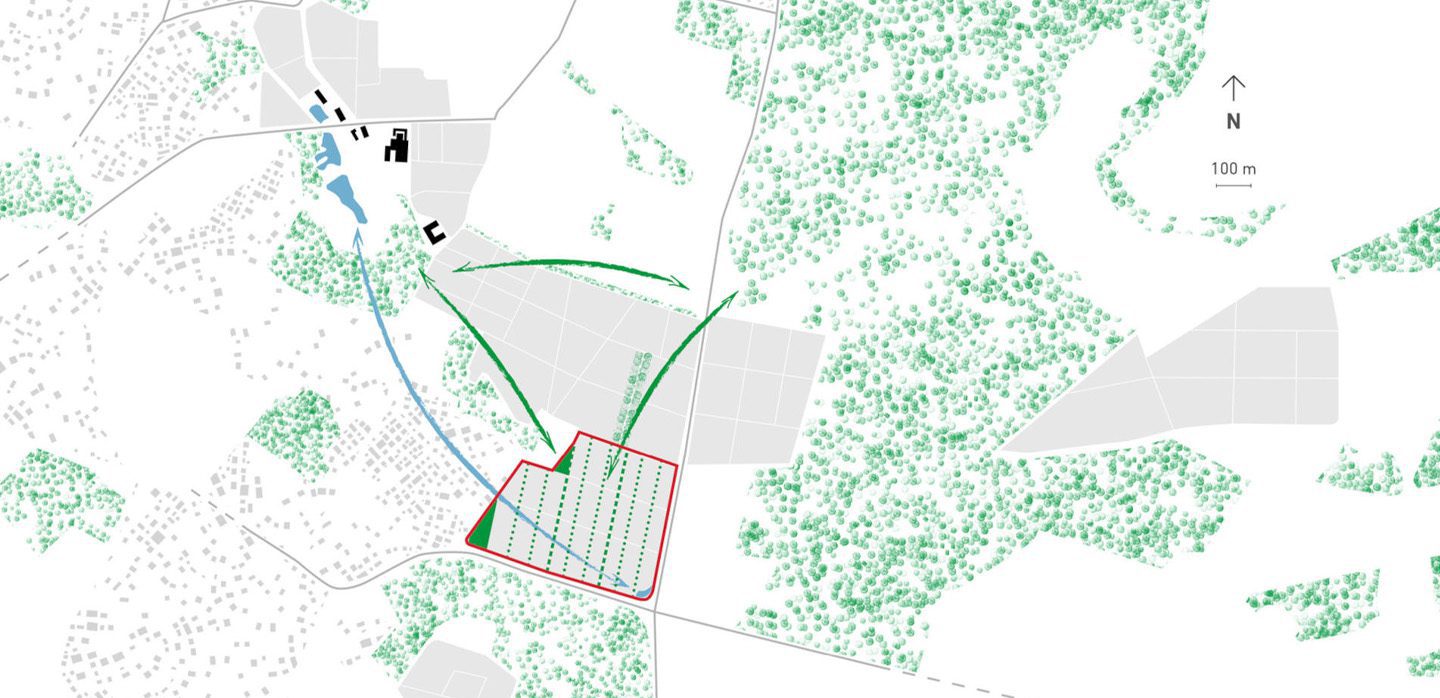
CONNECTING with what ALREADY EXISTS
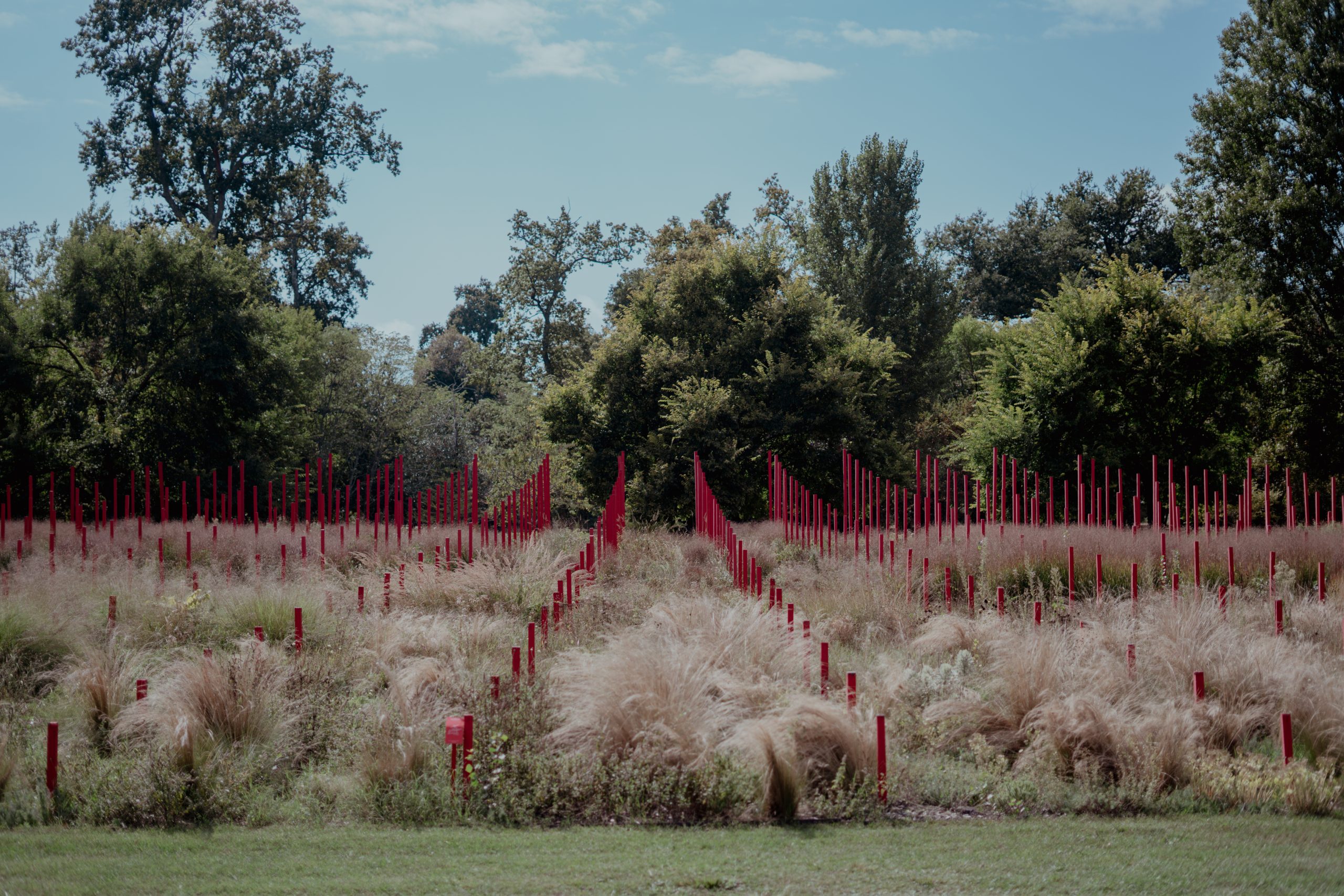
How can we preserve the continuity of a vineyard today whilst adapting to environmental changes? How can we promote biodiversity corridors (blue and green infrastructure) between the plot and the surrounding area? How can we create a resilient landscape where farmers’ common sense is informed by the full range of scientific data?
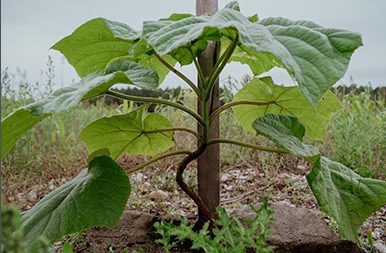
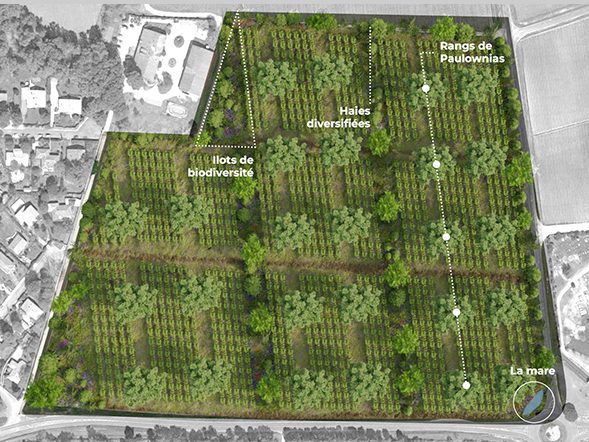
300 paulownia trees planted between rows
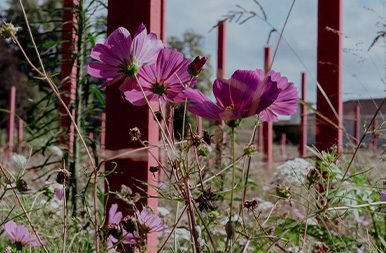
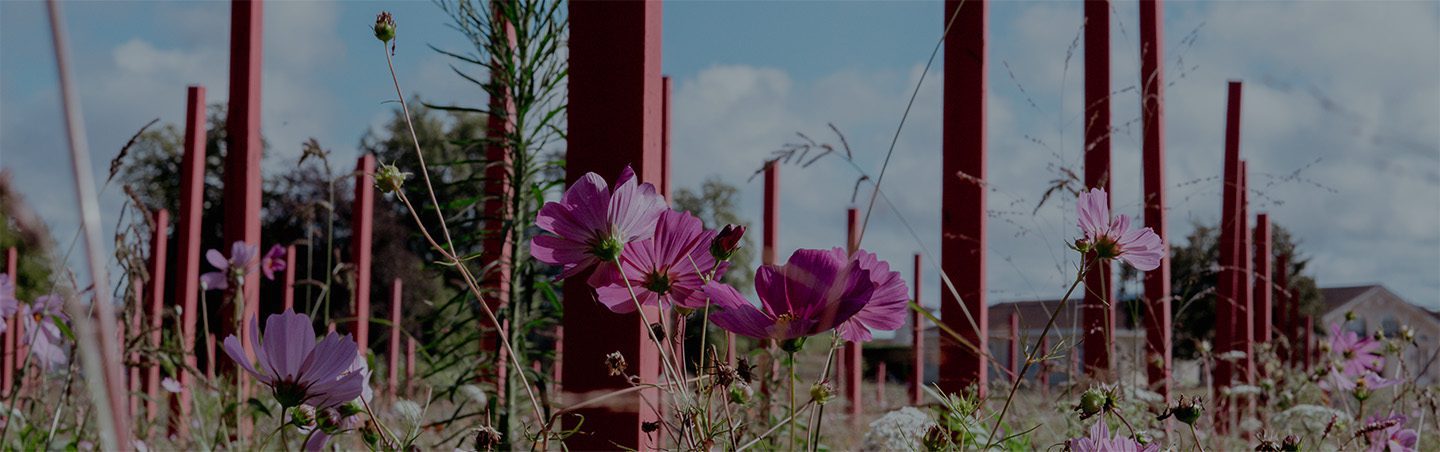
2,000 m² of flower strips
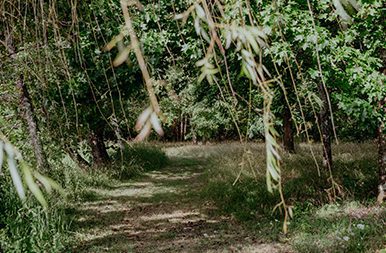
More than 20 species of trees across 10,000 m²
INTRA-PLOT
VITIFORESTRY
We quickly turned to the principles of vitiforestry. This practice allows us to connect the vineyard with the rest of the estate, including the park, the ponds and the forests that surround us. Our most significant risk in developing this plot for the future is planting trees between the rows of vines.
We set aside 10 per cent of our wine production for trees and flowers as part of our commitment to preserving the ecosystem.
The tree species were selected on the basis of their microclimatic effect, their current presence, or their ability to complement the species already present.
The NATURAL PARK:
the GREEN LUNG of the ESTATE
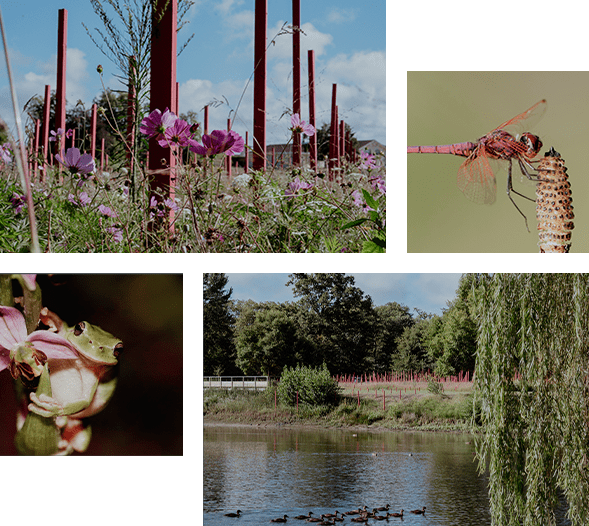
Larrivet Haut-Brion boasts a 13-hectare park, crucial for biodiversity preservation across the entire estate: a cornerstone for our project’s development and the source of green and blue corridors connecting existing areas with the replanting zone. It is home to three ponds covering a total area of over one hectare, equivalent to eight Olympic swimming pools!
The park has been managed semi-wildly for over ten years, preserving unmown areas and dead trees to create natural habitats for many species.

Over 70 ha
of woodland
13 hectares of
parkland

1 ha of
wetlands
The PAULOWNIA in
INTER-ROW: an INNOVATIVE choice
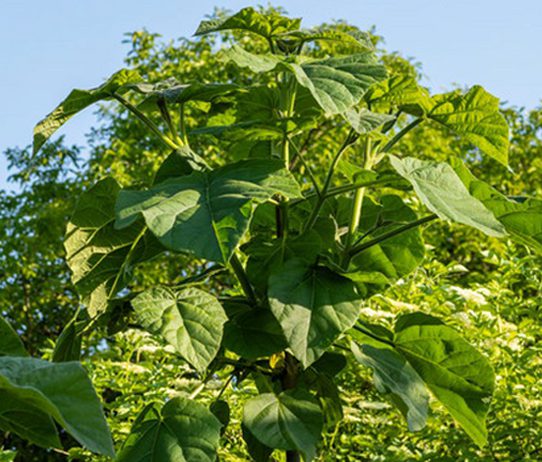
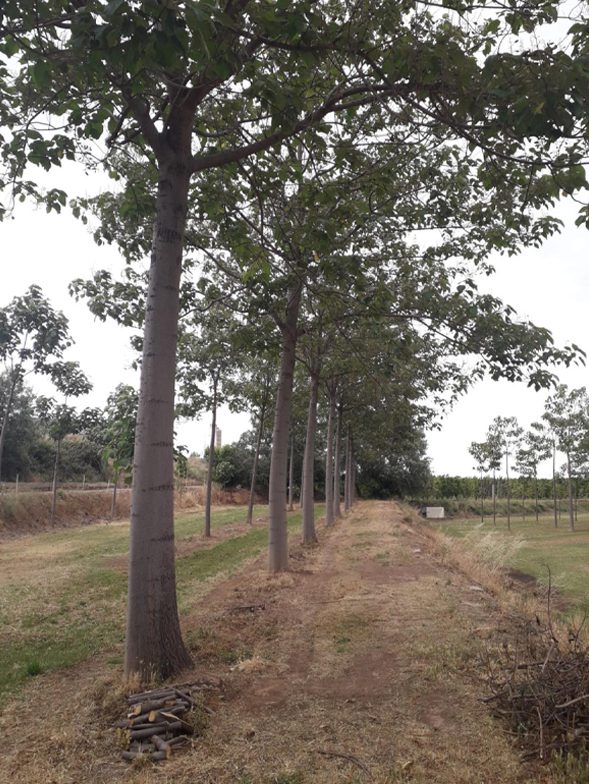
It is also known as the “tree of the future.” The Paulownia offers numerous advantages for the plot’s microclimate. It combines sustainability and circularity with the possibility of using its wood to create crates, for example.
Perfectly adapted to drought conditions, over three hundred Paulownias will be planted on the plot to create a protective microclimate for the vines thanks to their rapid growth, the shape of their leaves, and their above-average capacity to capture carbon.
MALBEC: the newcomer
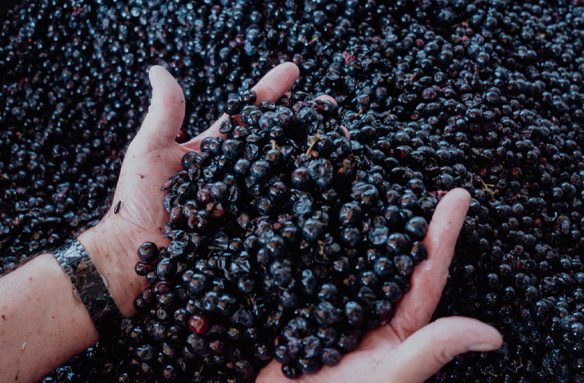
The grape varieties selected for this new parcel are Cabernet Sauvignon and Cabernet Franc, already present in the blend, and a new addition: Malbec.
The park has been managed semi-wildly for over ten years, preserving unmown areas and dead trees to create natural habitats for many species.
Malbec reaches good level of ripeness and also expresses itself beautifully on our gravelly soils. This minority grape variety will not exceed 5% of the final blend; Cabernet Sauvignon remains the dominant variety along with Cabernet Franc, which will also be showcased on other terroirs of the estate. These three varieties will be our long-term framework to preserve the tension of the wines and maintain magnificent balance despite rising temperatures in the medium and long term.
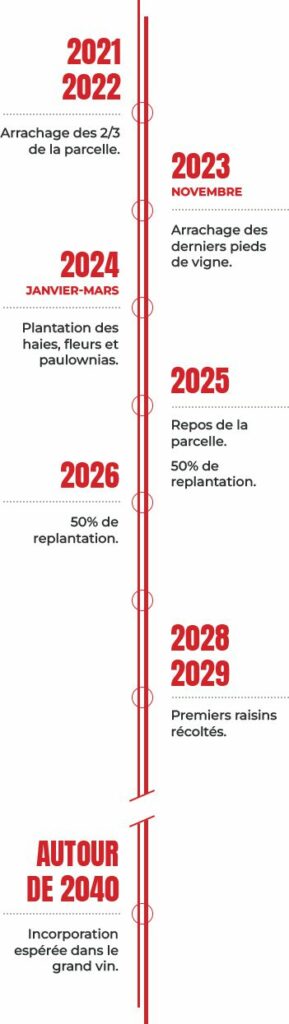
The MAJOR MILESTONES of the project